
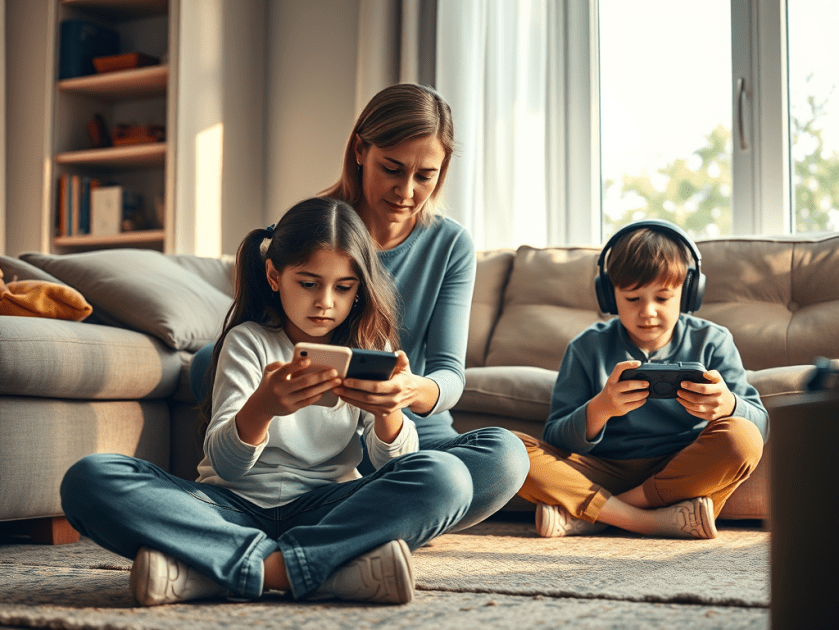
As a Gen X mom raising two Gen Z kids – a bright, sensitive daughter and a thoughtful, tech-savvy son – I’ve watched their childhoods unfold in ways I never could’ve imagined. When I was their age, my biggest thrill was riding bikes until the streetlights came on. Today, their world lives in the palm of their hands.
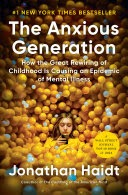
Jonathan Haidt’s The Anxious Generation hit me like a ton of bricks – not just as a book, but as a mirror. It gave words to what I’ve been sensing for years: that something fundamentally changed around 2010, when smartphones and social media became the air our kids breathe. Here’s what I learned and how I’m trying to help my kids navigate it all.
📱The Rise of the “Phone-Based Childhood” (Post-2010)
Key Shifts:
- Unsupervised Screen Time Replaced Real-World Play
- Kids stopped hanging out in person and started hanging out online.
- Less face-to-face interaction stunted development of social-emotional skills.
- Social Media Became the New Playground (and Battlefield)
- Especially for girls, platforms like Instagram and TikTok became spaces of constant comparison, judgment, and anxiety.
- The “like” button turned self-worth into a public scoreboard.
- Boys Turned to Gaming and YouTube
- Boys retreated into gaming worlds, often isolating themselves from real-life friendships and emotional expression.
- While not as appearance-focused as girls’ online experiences, this led to emotional numbness and social disconnection.
- Sleep, Focus, and Mental Health Declined Sharply
- Screen use before bed ruined sleep hygiene.
- Constant pings and dopamine loops reduced attention spans and increased anxiety and depression.
💔 How It Hit Home for Me
I’ve seen my daughter’s self-esteem crash after scrolling Instagram, comparing herself to perfectly filtered influencers. I’ve watched my son lose hours to YouTube rabbit holes and video games, sometimes struggling to express how he feels or deal with real-world stress.
They are not lazy. They are not weak. They are navigating a world that’s radically different – and, in many ways, untested.
🛑 What We Can Do to Reclaim Childhood
Jonathan Haidt doesn’t just diagnose the problem – he offers a path forward. Here’s what we should start doing (and what I wish we’d all consider as a community):
1. Delay the Smartphone
- Wait until at least age 14 to give a smartphone with full internet access.
- Start with a basic phone for safety (calls/texts only).
2. No Phones in Bedrooms at Night
- Made charging stations in the kitchen, not the bedrooms.
- Better sleep = better mental health.
3. Encourage In-Person Friendships
- Set up regular playdates, hangouts, or outdoor time.
- Support extracurriculars that build social bonds – sports, drama, volunteering.
4. Model Digital Discipline
- I’ve started putting my own phone down during dinner or family time.
- Kids learn more from what we do than what we say.
5. Push for School-Wide Phone Bans
- Haidt recommends schools become phone-free zones.
- When my daughter’s school limited phones, bullying incidents and distractions dropped.
6. Teach Tech Literacy and Emotional Resilience
- Talk to kids openly about algorithmic traps, online peer pressure, and curated realities.
- Normalize therapy, mindfulness, and mental health check-ins.
🧭 Looking Ahead: Raising Resilient Kids
As a Gen X parent, I straddle two worlds: the analog one I grew up in and the digital one my kids are drowning in. The Anxious Generation reminded me that while technology has changed, the core needs of children haven’t – love, connection, purpose, and play.
We owe it to our kids to give them more than dopamine hits and screen time. Let’s give them a childhood worth remembering.
📘 Highly Recommend:
Jonathan Haidt’s The Anxious Generation is a must-read for any parent, educator, or policymaker. It’s not just about fear – it’s about hope, backed by research, compassion, and common sense.
 Nadia Karaboycheva