
Posted in Management, Workplace

Transitioning from eCommerce to Product Management

When people imagine the career path into product management, they often picture software engineers or UX designers making the leap. My journey began elsewhere – deep in the world of eCommerce operations and digital site management. Yet every step I took in that environment quietly honed the very skills a great Product Manager needs.

Building Strategy from the Ground Up

As Digital Site Operations Lead at Hudson’s Bay, I wasn’t just keeping the lights on. I influenced the strategy and roadmap for increasing online conversion and profitability year over year. That experience – identifying levers for growth, setting measurable goals, and aligning teams around a plan – is exactly what product managers do when they craft and execute a product vision.

Living Side-by-Side with Product

Over the past five years, I have worked hand-in-hand with product managers on thebay.com, staying close to the products and features as they moved from concept to launch. I’ve helped identify customer pain points, shaped business requirements, and pulled key metrics to demonstrate the importance of new features. I’ve participated in functional, regression, and user testing, and I’ve spent countless hours troubleshooting and enhancing site functionality. This close partnership gave me a front-row seat to the full product development lifecycle and allowed me to practice many of the very responsibilities PMs own.

Leading Across Functions

eCommerce is a team sport. My roles demanded constant collaboration with Product, UX, Technology, QA, Merchandising, Marketing, Buying, and external vendors. Navigating these relationships taught me how to influence without direct authority, manage competing priorities, and keep diverse stakeholders moving toward a shared outcome. Cross-functional leadership is the beating heart of product management, and I’ve been practicing it for years.

Data as a Decision Engine

Product managers live and breathe data. In my operations career, data wasn’t an afterthought – it was the driver of every decision. I tracked site conversion, analyzed customer behavior, and used SQL to uncover insights that shaped priorities. The ability to frame problems with numbers and translate them into actionable next steps has become one of my strongest assets.

Obsessing Over the Customer

Behind every metric is a human being. Whether researching customer feedback on Medallia, retracing customer actions on Fullstory, monitoring repeat purchase rates, or fine-tuning onsite search and recommendations, I’ve always asked: What does this mean for the shopper? Keeping the customer at the center of every decision is second nature now, and it’s exactly the mindset product managers need to build products people love.

Delivering with Operational Excellence

Great ideas mean little if they can’t be delivered. Years of participating in site QA efforts, managing product information systems, and reducing defect rates taught me to balance innovation with execution. Product managers must ensure that what’s planned actually ships with quality – skills I developed while turning ambitious digital strategies into on-site realities.

Leading Teams and Scaling Impact

From hiring and mentoring analysts to developing process documentation and training materials, I’ve invested in people as much as processes. Product management is about scaling impact through others, and leading high-performing teams prepared me to do just that.

Looking Ahead

My path proves that product management isn’t limited to one background. eCommerce operations demanded strategic thinking, customer empathy, data fluency, and relentless delivery – the same qualities that define successful product managers. The titles on my résumé may read “Digital Site Operations” or “Director,” but the work has always been product work at its core.

For anyone considering a similar transition, take heart: the skills you’re honing today may already be the foundation of a product career. Sometimes, you’ve been a product manager all along – you just haven’t changed the job title yet.

Posted in communication, Management, Motivation, success, Workplace

Why and How we Should Use Pygmalion Effect to Boost Productivity

The Pygmalion effect, or Rosenthal effect, is a psychological phenomenon where higher expectations lead proportionally to improved higher performance, which makes this method important for improving the overall productivity, including increase considerably the employee’s or student’s efficiency and help an organization grow.

Variety of studies show that people will improve, or drop, to the levels which their teachers of managers believe them to be capable. In order to implement this method in practice, it is up to the managers or teachers to have high expectations for their employees or students, and regularly communicate those expectations.

“Organizational Leaders understandably have an influence on the success of employees, and can play a part in that success or failure, at times, without even realizing it. Positive expectations are important to ensure a positive outcome, as the belief itself can affect the giver and the receiver. Managers not only shape the expectations and the performance of the subordinates but also influence their attitude towards their jobs and themselves, if managers are unskilled it leaves a scar on the employees and the overall unit performance of the company decreases and their reputations as coaches is harmed, on the other hand if the managers can induce confidence and make the subordinates believe in themselves, their capabilities will grow and the growth of the firm happens. “

Here are a few steps to start boosting student’s or employee’s performance:

  • Express confidence in their talent and abilities – to remind them about previous records of success and history of accomplishments.
  • Celebrate Accomplishments – to recognize what’s working well and why, develop a growth mindset and motivate.
  • Assume Good Intent – Listen to what’s being said and try to understand it and don’t “read between the lines” & ask for clarification if needed.
  • Show Empathy – to build emotional connection: listen carefully, put yourself in the other person’s shoes, allow sharing vulnerabilities, build trust and offer help.
  • Think Long Term – focus on what the long term result will be and support consistency.

Posted in Books, Management, TED talks, Workplace

Must-Read Book: “Leaders Eat Last: Why Some Teams Pull Together and Others Don’t” by Simon Sinek

You probably have heard about this book already in the media many times, and much has been already said and written about it since it was published in 2014, so I won’t take your time with long persuasive speech. I enjoyed the book thoroughly, learned a lot about how people grow to be good leaders, and recommend if you haven’t read it yet and want to improve your leadership skills to set time aside and read it.

I promise you, you will feel wiser and better person at the end, and will treat your team with more respect and integrity.

Posted in Inspirational, Quotes, success

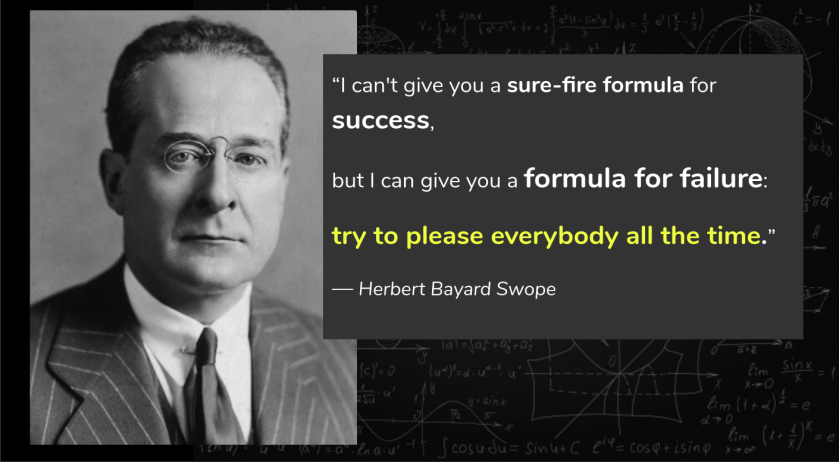
Herbert Bayard Swope: “I can give you a formula for failure” – Inspirational Quote of the Week

Happy Wednesday!

Today’s quote comes from Herbert Bayard Swope. He was a US journalist and editor, who was born at the of XIX century and lived until mid XX century. He was the first recipient of Pulitzer Prize for Reporting in 1917 for articles about the German Empire and is a three-times Pulitzer Prize recipient for his lifetime.

Have you ever found yourself trying to please people around you? It happens to me often … I seek to be surrounded with predominantly happy people, but pleasing them might not be always a recipe for successful relationship. Actually, pleasing is not equal to kindness, so see if you could practice the following techniques to reduce your inclination to please people:

  • Don’t pretend you agree with everyone just to be liked.
  • Don’t feel responsible for how other people feel.
  • Stop apologizing.
  • You’re in charge of how you spend your time. Don’t spend it for activities that are not part of your priorities.
  • Learn how to say NO assertively.
  • Don’t feel bad if other people are angry at you. It’s not necessary your fault and you should not compromise your values.
  • Don’t wait for compliments to feel good about yourself.
  • Don’t try to avoid conflicts at all costs.
  • Keep relationships authentic and share honestly when you feel angry, sad, embarrassed, or disappointed, and don’t try to hide your feelings.

Let me know how you feel about pleasing others and what you do to fight the inclination to agree with others, just to keep them happy.

Posted in Books, Motivation, Quotes, success

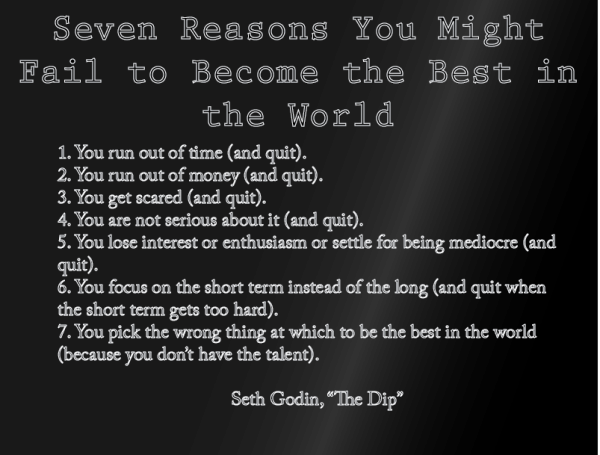
Seven Reasons You Might Fail to Become the Best in the World, defined by Seth Godin in “The Dip”

In his bestselling little book “The Dip”, the famous business marketer and author Seth Godin proves that winners are really the best quitters. Godin helps us understand that winners quit fast and often, and without feeling guilty – until they commit to beating the right Dip.

Every new project, job, or hobby starts out exciting and fun until … it gets really hard, and not much fun at all. You might be in a Dip – a temporary setback that will get better if you keep pushing. But maybe it’s a total dead-end. What really sets the superstars apart is the ability to know if it’s a dead-end or temporary setback.

Winners seek out the Dip. They realize that the bigger the challenge, the bigger the reward for getting past it. If you can beat the Dip to be the best, you’ll earn profits, glory, and long-term security.

Do you quit often? Can you handle “the dip”?

Seven Reasons


If you haven’t yet, consider reading it:

The Dip: A Little Book That Teaches You When to Quit (and When to Stick)

Posted in communication, life, Personality, success, TED talks

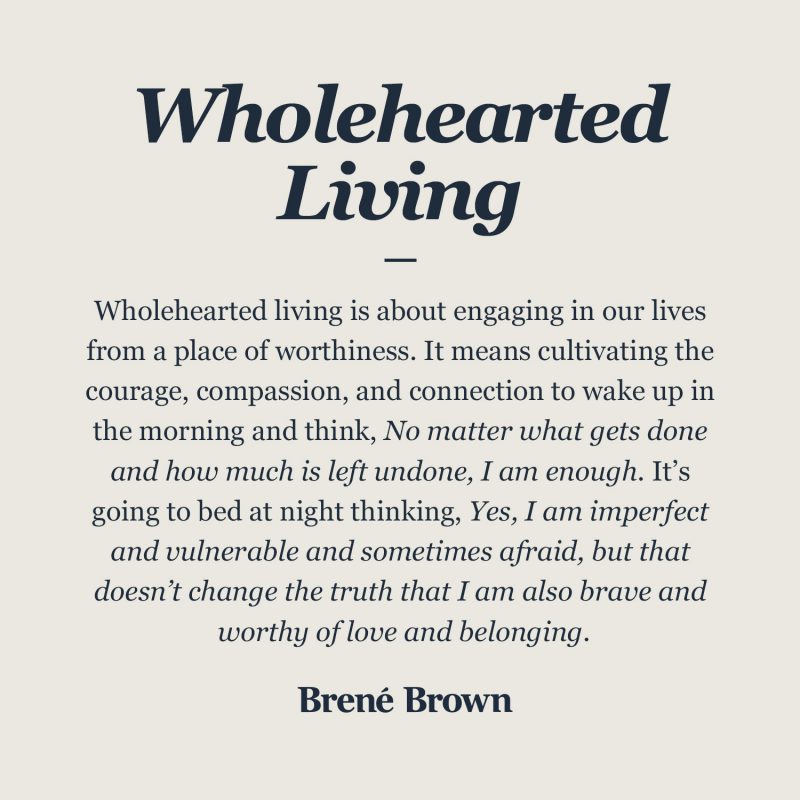
The 4 Practices to Cultivate Wholeheartedness?

When you ask people about love, they’ll tell you about heartbreak. When you ask people about belonging, they’ll tell you about how they have been excluded. When you ask people about connection, the stories they’ll tell you are about disconnection.

Interesting, right? We always first recall the negative experiences in life and mute the positive memories.

Dr. Brené Brown is a research professor at the University of Houston and the author of five #1 New York Times bestsellers: The Gifts of Imperfection, Daring Greatly, Rising Strong, Braving the Wilderness, and Dare to Lead.

In her TED Talk: The power of vulnerability, she outlines the following four life-changing practices that can help us live worthy, wholehearted life, stop recalling only the heartbreak, pain and disconnection, but find the joy and happiness: 

  1. Have a sense of COURAGE – when communicating with others tell the story of who you really are and accept your imperfections.
  2. Practice COMPASSION – treat yourself kindly first and then treat others with compassion.
  3. Develop CONNECTION as a result of authenticity – willingness to let go of who you think you should be in order to be who you are.
  4. Embrace VULNERABILITY – give without expecting anything in return, share anything without the fear of being judged, open yourself to people you love, because you are worthy of the same love. If we don’t allow to be vulnerable, we block the joy, gratitude and happiness, and feel worse.
wholehearted-living-definition-800x800-1

If you want to learn more how to live with courage an vulnerability, check out Dr. Brown’s book

Daring Greatly: How the Courage to Be Vulnerable Transforms the Way We Live, Love, Parent, and Lead

Posted in Books, Personality, success, TED talks, Workplace

TED talk: Adam Grant about The Givers & Takers

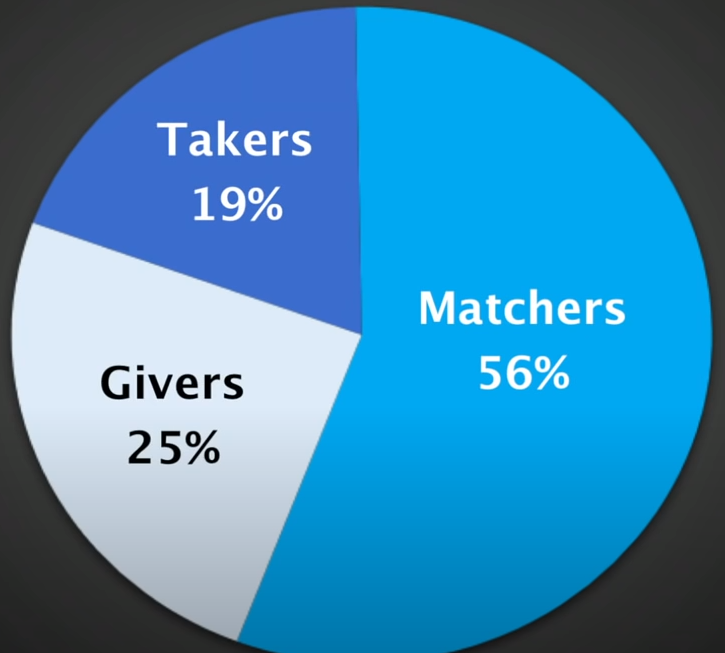
Adam Grant is an organizational psychologist, who has researched the different personalities of employees and determined that in the office environment, there are three basic kinds of people:

  • Givers, giver_taker_matchers
  • Takers &
  • Matchers

According to the research, the majority of people are Matchers and we all have our moments of giving and taking, but we most probably are inclined to be either a Giver or a Taker.

You can figure out for yourself by acknowledging which of the following two questions you will most often ask yourself when you interact with your colleagues: What can you do for me? or What can I do for you?

Many studies have proven that in order for a company or an organization to prosper, there is a need to have a culture of generosity, where people, willing to teach others are encouraged and the knowledge and skills are safely carried over from person to person, without fear of being judged or laughed at.

In my experience with a company for more than 3-4 years, I have seen a high percentage of turnover of staff, and in many of these cases, the knowledge and wisdom these people possessed were lost for the organization once they left. This lack of learning is not always acknowledged by the company but has a significant impact on the new employees. The newly hired employees inevitably start from scratch and build proficiency, mostly based on own practice and errors, and lack the wisdom of mentors or senior associates.

For making any organization successful, Adam Grant offers simple strategies to promote a culture of generosity and keep self-serving employees from taking more than their share. The three simple steps are:

  1. Protect Givers from burnout – Make sure Givers provide quick tips and don’t just do most of the work themselves.
  2. Encourage help-seeking –  Make it easy and safe to ask for help.
  3. Get the right people on the bus. Keep the wrong people off the bus – having Takers in the team, poisons the atmosphere, where any and all collaboration is difficult. In such an atmosphere, even the Givers are discouraged to help.

Read the Entire Book

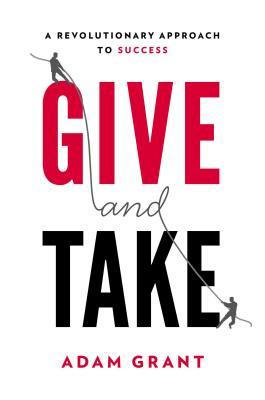
16158498If you haven’t read it yet and you are interested to hear all about Adam Grant’s research on the matter, please read the book. The full title is Give and Take: A Revolutionary Approach to Success and you can order it from your favorite online book store or get it from your neighborhood library, where it is available in multiple formats: printed version, e-book or audiobook.

 The book has been translated into 30 languages and named one of the best books of 2013 by Amazon, Apple, the Financial Times, and The Wall Street Journal—as well as one of Oprah’s riveting reads, Fortune’s must-read business books, Harvard Business Review’s ideas that shaped management, and the Washington Post’s books every leader should read.

Are you wondering if you are a Giver or a Taker?

Assess yourself. As Adam Grant explains, the assessment is using state-of-the-art methods in organizational psychology. For each question, give the answer that comes naturally to you. Your results will only be as accurate as you are honest—and self-aware.

Posted in Books, creativity, TED talks

TED Talk: Steven Johnson about the Idea Process

How the ideas are born? Where and when is the ideal place and time to come up with ideas?

Steven Johnson author of the book “Where Good Ideas Come From” gives a remarkable talk about the recipe for creating a great idea.

“We take ideas from other people, from people we’ve learned from, from people we run into in the coffee shop, and we stitch them together into new forms and we create something new. That’s really where innovation happens.”

Where Good Ideas Come From: The Natural History of Innovation


For more on his theories and findings, read his book “Where Good Ideas Come From“.


Posted in communication, success, TED talks, Workplace

TED Talk: Julian Treasure of How to Speak to be Heard


What did I learn from Julian Treasure’s talk?

Seven deadly SINS of speaking. Let’s all try to avoid them!

  1. Gossip
  2. Judging
  3. Negativity
  4. Complaining
  5. Excuses
  6. Exaggeration/ lying
  7. Dogmatism

♠ ♠ ♠

Four elements which will improve the speech to be more powerful and important for the audience:

  1. Honesty = being true to what you say, being straight and clear
  2. Authenticity = just being yourself
  3. Integritybeing your word,actually doing what you say, and being somebody people can trust
  4. Love = wishing people well

♠ ♠ ♠

Six tools which will increase the power of speaking if used in the right way:

  1. Register – speak with deep lower voice if you want to project power and with authority;
  2. Timbre the way the voice feels (people prefer voices which are rich, smooth and warm);
  3. Prosody – the patterns of stress and intonation in speaking;
  4. Pace – how quickly we speak;
  5. Pitch – high or low
  6. Volume


Posted in success, TED talks, Workplace

TED Talk: Richard St. John About the Secrets of Success

Presenting two brief, but insightful and inspirational talks by the success analyst Richard St. John

Here are the 8 secrets of SUCCESS:

  1. Have PASSION and LOVE what you do.
  2. WORK hard and have FUN while you work.
  3. Be GOOD in what you do and PRACTICE, practice, practice.
  4. FOCUS on ONE thing.
  5. PUSH yourself mentally and physically.
  6. SERVE others something of VALUE.
  7. Have IDEAS.
  8. PERSIST through failure, criticism, rejection, assholes and pressure.


Thank you, Richard St. John, for being successful and reveal the 8-traits to be great!

… and here is my next good read …

8 to Be Great: The 8-Traits That Lead to Great Success