Posted in Management, Workplace

Transitioning from eCommerce to Product Management

When people imagine the career path into product management, they often picture software engineers or UX designers making the leap. My journey began elsewhere – deep in the world of eCommerce operations and digital site management. Yet every step I took in that environment quietly honed the very skills a great Product Manager needs.

Building Strategy from the Ground Up

As Digital Site Operations Lead at Hudson’s Bay, I wasn’t just keeping the lights on. I influenced the strategy and roadmap for increasing online conversion and profitability year over year. That experience – identifying levers for growth, setting measurable goals, and aligning teams around a plan – is exactly what product managers do when they craft and execute a product vision.

Living Side-by-Side with Product

Over the past five years, I have worked hand-in-hand with product managers on thebay.com, staying close to the products and features as they moved from concept to launch. I’ve helped identify customer pain points, shaped business requirements, and pulled key metrics to demonstrate the importance of new features. I’ve participated in functional, regression, and user testing, and I’ve spent countless hours troubleshooting and enhancing site functionality. This close partnership gave me a front-row seat to the full product development lifecycle and allowed me to practice many of the very responsibilities PMs own.

Leading Across Functions

eCommerce is a team sport. My roles demanded constant collaboration with Product, UX, Technology, QA, Merchandising, Marketing, Buying, and external vendors. Navigating these relationships taught me how to influence without direct authority, manage competing priorities, and keep diverse stakeholders moving toward a shared outcome. Cross-functional leadership is the beating heart of product management, and I’ve been practicing it for years.

Data as a Decision Engine

Product managers live and breathe data. In my operations career, data wasn’t an afterthought – it was the driver of every decision. I tracked site conversion, analyzed customer behavior, and used SQL to uncover insights that shaped priorities. The ability to frame problems with numbers and translate them into actionable next steps has become one of my strongest assets.

Obsessing Over the Customer

Behind every metric is a human being. Whether researching customer feedback on Medallia, retracing customer actions on Fullstory, monitoring repeat purchase rates, or fine-tuning onsite search and recommendations, I’ve always asked: What does this mean for the shopper? Keeping the customer at the center of every decision is second nature now, and it’s exactly the mindset product managers need to build products people love.

Delivering with Operational Excellence

Great ideas mean little if they can’t be delivered. Years of participating in site QA efforts, managing product information systems, and reducing defect rates taught me to balance innovation with execution. Product managers must ensure that what’s planned actually ships with quality – skills I developed while turning ambitious digital strategies into on-site realities.

Leading Teams and Scaling Impact

From hiring and mentoring analysts to developing process documentation and training materials, I’ve invested in people as much as processes. Product management is about scaling impact through others, and leading high-performing teams prepared me to do just that.

Looking Ahead

My path proves that product management isn’t limited to one background. eCommerce operations demanded strategic thinking, customer empathy, data fluency, and relentless delivery – the same qualities that define successful product managers. The titles on my résumé may read “Digital Site Operations” or “Director,” but the work has always been product work at its core.

For anyone considering a similar transition, take heart: the skills you’re honing today may already be the foundation of a product career. Sometimes, you’ve been a product manager all along – you just haven’t changed the job title yet.

Posted in Data Analysis, Management, Marketing, success, Workplace

AI Ethics: The Key to Trust in eCommerce

Artificial Intelligence is revolutionizing eCommerce, from personalized recommendations and dynamic pricing to automated customer service and fraud detection. But as retailers embrace AI to optimize experiences and drive sales, they face a critical responsibility: ensuring AI is deployed ethically.

For eCommerce brands, AI Ethics is no longer optional – it’s a foundational pillar for customers trust, brand reputation, and long-term success.


Why AI Ethics Matters for eCommerce

Today’s consumers expect more than convenience – they demand transparency, fairness, and respect for their privacy. AI-driven tools influence product discovery, pricing, personalized offers, and increasingly, the product content itself – from descriptions to images.

A misstep – whether through misleading AI-generated content, biased recommendations, or misuse of personal data – can erode trust and spark public backlash.

Ethical AI is a competitive advantage that protects your brand and fosters loyalty.


Key AI Ethics Considerations for eCommerce Brands

1. Transparency in Personalization

  • What to Consider: Are product recommendations, search rankings, or pricing algorithms explainable to customers?
  • Why it Matters: Shoppers who feel manipulated by hidden AI may abandon your brand.
  • Action: Offer transparency tools and clear communication around AI-driven experiences.

2. Bias & Fairness in Product Discovery

  • What to Consider: Does your AI system promote products or sellers unfairly due to biased data?
  • Why it Matters: Bias limits consumer choice and can marginalize smaller or diverse sellers.
  • Action: Audit AI outputs regularly and diversify training data to promote fairness.

3. Data Privacy & Consent

  • What to Consider: Are AI-driven personalization and marketing fully compliant with privacy laws (GDPR, CCPA)?
  • Why it Matters: Data misuse erodes trust and invites legal penalties.
  • Action: Prioritize transparent consent processes and empower customers to control their data.

4. Dynamic Pricing Ethics

  • What to Consider: Are your AI-driven pricing models transparent and fair to all customer groups?
  • Why it Matters: Exploitative or opaque pricing damages brand reputation.
  • Action: Set ethical boundaries for pricing AI, ensuring fairness and transparency.

5. AI-Generated Product Descriptions & Images

  • What to Consider: Are AI-generated product descriptions, images, or videos truthful, representative, and free from manipulation?
  • Why it Matters: AI content that exaggerates product capabilities, uses unrealistic images, or creates deepfakes undermines consumer trust and invites legal risks.
  • Action: Implement strict content review processes for AI-generated materials. Clearly label AI-enhanced imagery if applicable and ensure all product representations are accurate and not misleading.

6. AI-Driven Customer Service with Accountability

  • What to Consider: Are AI chatbots and support tools reliable and inclusive?
  • Why it Matters: Poorly designed AI support frustrates customers and damages loyalty.
  • Action: Blend AI with human service options, ensuring accessibility and reliable escalation pathways.

7. Social Impact & Responsible Automation

  • What to Consider: How does AI affect your workforce, supplier diversity, and social equity?
  • Why it Matters: Automation without consideration for its broader impact can harm communities and brand integrity.
  • Action: Use AI to augment – not replace – human contributions and support equitable opportunities across your ecosystem.

Building an Ethical AI Roadmap for eCommerce

Embedding ethics in your AI strategy isn’t just good governance – it’s essential for lasting success. Start with:

Content Oversight: Establish human review checkpoints for AI-generated product content and ensure authenticity.
Bias Audits: Regularly evaluate AI-driven product recommendations, search, and marketing for fairness.
Privacy-First Approach: Offer transparent, consent-driven personalization with robust data protection.
Transparency in AI Use: Clearly communicate when AI shapes product discovery, pricing, or content.
Responsible Innovation: Consider social, workforce, and inclusivity impacts in your AI strategy.


The Bottom Line

In eCommerce, where trust is fragile and competition fierce, ethical AI is a brand differentiator. Companies that integrate AI responsibly – whether through personalized recommendations, dynamic pricing, or AI-generated content – will win customer loyalty and avoid reputational pitfalls.

AI can revolutionize retail – but only if guided by ethics.

Posted in Books, Motivation, Workplace

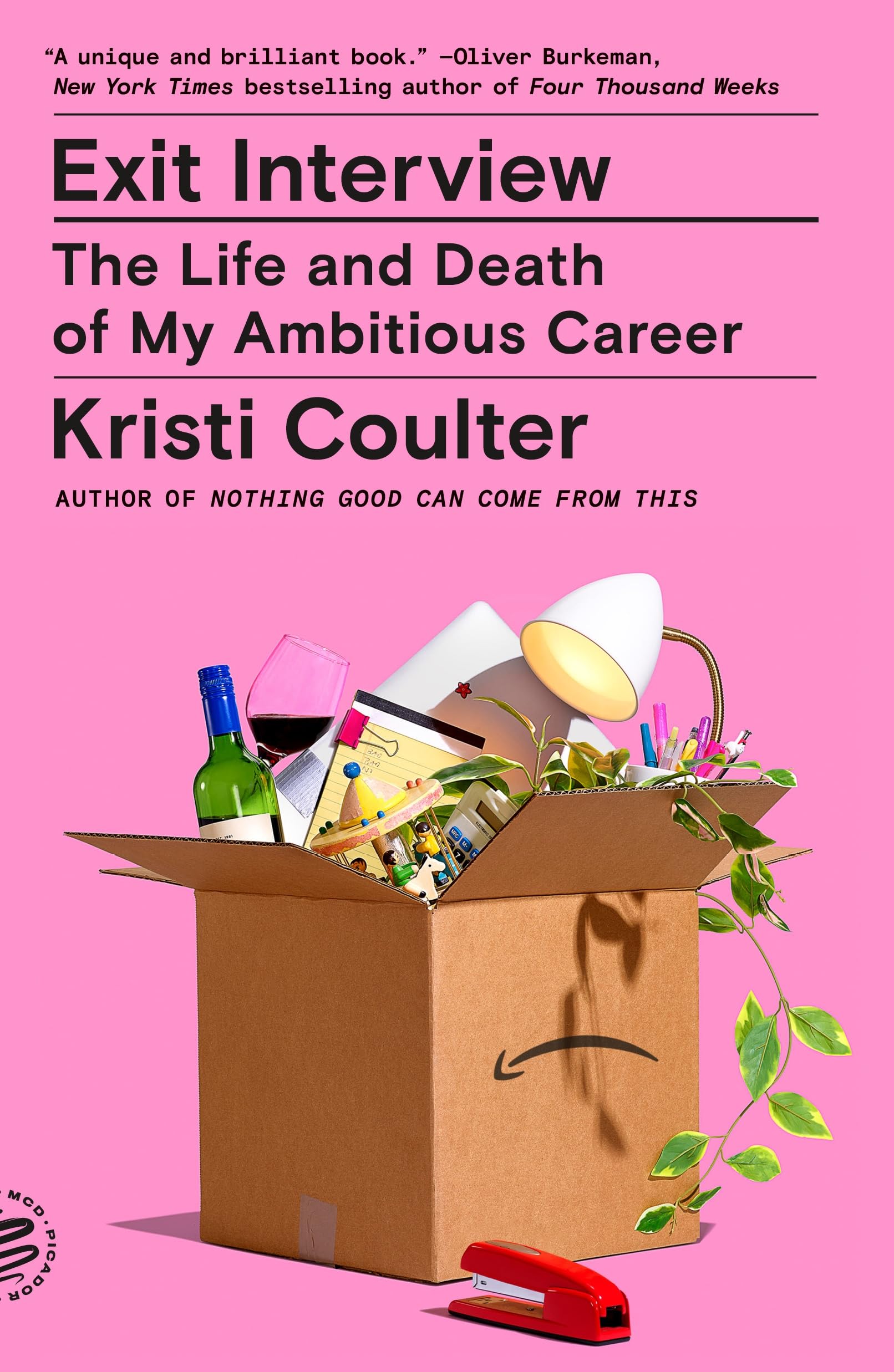
My Exit Interview: What Kristi Coulter Taught Me About Leaving Corporate Retail in 2025

In the days since my role in eCommerce was eliminated – part of a sweeping reorganization as my employer, a legacy retail giant with both a robust brick-and-mortar presence and a now-aging eCommerce platform, filed for creditor protection -I’ve been looking for clarity. For some sense of what all this hustle, all these midnight promotions, all this omnichannel strategizing really meant. I didn’t expect to find comfort in Exit Interview by Kristi Coulter, but I did.

Coulter’s memoir is clearly about her time in Big Tech, but it resonated deeply with me, a career eCommerce professional who spent over a decade trying to modernize a brand that always seemed one step behind consumer expectations. Her sharp, honest prose peeled back the glittery veneer of corporate ambition to show the cost: to our time, our values, our very sense of self.

Reading Exit Interview while sitting in a kitchen I now spend my days in instead of my corner of the open office plan, I found myself nodding. Yes, my team too had built dashboards no one read. We had promoted online programs to executives who still measured success by foot traffic. We had tried to reinvent a digital presence built in 2010, while convincing leadership that “omnichannel” was more than just a buzzword.

Like Coulter, my team chased performance metrics that shifted monthly. We worked holidays and weekends to hit digital sales targets, often sacrificing personal time for the promise of “transformational impact.” And when the end came – not with a handshake, not even with a Zoom meeting or severance pay – it felt less like a career milestone and more like waking up from a long, over-caffeinated dream.

The Illusion of Stability

For years, we were told that adapting brick-and-mortar to digital would secure the future. We did the hard work – migrated platforms, upgraded CMS systems, fought for automation budgets, and launched mobile-first everything. And yet, when the economy squeezed and debt caught up with ambition, the tech-forward teams were among the first to go.

There’s a painful irony in that. We were building the future while quietly being dismissed as cost centers.

The Emotional Hangover

Coulter doesn’t sugarcoat the emotional unraveling that comes with stepping off the corporate hamster wheel. It’s not just about losing a job; it’s about losing the narrative you built around it. For many of us in eCommerce, our careers weren’t just what we did – they were who we were. We were “the future of retail.” Now we’re resumes in inboxes and Slack accounts deactivated without warning.

Reading her words helped me understand that the grief I’m feeling isn’t irrational. It’s not about ego, or even financial fear. It’s about disconnection – from identity, from purpose, from a community of people who spent years doing something we believed mattered.

What Comes Next

If Exit Interview teaches anything, it’s that there is life after the corporate machine. Not necessarily one filled with poetic freedom and farmhouses in Maine, but one where you can begin to reclaim your time, your values, and maybe – eventually – your curiosity.

Right now, I’m learning to sit with the uncertainty. To take stock of what I built, even if the company itself no longer stands. To reconnect with the part of me that got into this work not for titles or KPIs, but because I genuinely believed in helping people discover and buy things they love.

I don’t know what comes next. Consulting? A startup? A total pivot? But I do know this: leaving wasn’t my choice, but how I move forward is. And for that clarity, I owe at least a footnote of thanks to Kristi Coulter.

Her exit interview has become the beginning of mine.

Posted in Books, communication, happiness, life

Growing Up in the Age of Anxiety: A Gen X Mom’s Reflection on The Anxious Generation by Jonathan Haidt

As a Gen X mom raising two Gen Z kids – a bright, sensitive daughter and a thoughtful, tech-savvy son – I’ve watched their childhoods unfold in ways I never could’ve imagined. When I was their age, my biggest thrill was riding bikes until the streetlights came on. Today, their world lives in the palm of their hands.

Jonathan Haidt’s The Anxious Generation hit me like a ton of bricks – not just as a book, but as a mirror. It gave words to what I’ve been sensing for years: that something fundamentally changed around 2010, when smartphones and social media became the air our kids breathe. Here’s what I learned and how I’m trying to help my kids navigate it all.

📱The Rise of the “Phone-Based Childhood” (Post-2010)

Key Shifts:

  • Unsupervised Screen Time Replaced Real-World Play
    • Kids stopped hanging out in person and started hanging out online.
    • Less face-to-face interaction stunted development of social-emotional skills.
  • Social Media Became the New Playground (and Battlefield)
    • Especially for girls, platforms like Instagram and TikTok became spaces of constant comparison, judgment, and anxiety.
    • The “like” button turned self-worth into a public scoreboard.
  • Boys Turned to Gaming and YouTube
    • Boys retreated into gaming worlds, often isolating themselves from real-life friendships and emotional expression.
    • While not as appearance-focused as girls’ online experiences, this led to emotional numbness and social disconnection.
  • Sleep, Focus, and Mental Health Declined Sharply
    • Screen use before bed ruined sleep hygiene.
    • Constant pings and dopamine loops reduced attention spans and increased anxiety and depression.

💔 How It Hit Home for Me

I’ve seen my daughter’s self-esteem crash after scrolling Instagram, comparing herself to perfectly filtered influencers. I’ve watched my son lose hours to YouTube rabbit holes and video games, sometimes struggling to express how he feels or deal with real-world stress.

They are not lazy. They are not weak. They are navigating a world that’s radically different – and, in many ways, untested.

🛑 What We Can Do to Reclaim Childhood

Jonathan Haidt doesn’t just diagnose the problem – he offers a path forward. Here’s what we should start doing (and what I wish we’d all consider as a community):

1. Delay the Smartphone

  • Wait until at least age 14 to give a smartphone with full internet access.
  • Start with a basic phone for safety (calls/texts only).

2. No Phones in Bedrooms at Night

  • Made charging stations in the kitchen, not the bedrooms.
  • Better sleep = better mental health.

3. Encourage In-Person Friendships

  • Set up regular playdates, hangouts, or outdoor time.
  • Support extracurriculars that build social bonds – sports, drama, volunteering.

4. Model Digital Discipline

  • I’ve started putting my own phone down during dinner or family time.
  • Kids learn more from what we do than what we say.

5. Push for School-Wide Phone Bans

  • Haidt recommends schools become phone-free zones.
  • When my daughter’s school limited phones, bullying incidents and distractions dropped.

6. Teach Tech Literacy and Emotional Resilience

  • Talk to kids openly about algorithmic traps, online peer pressure, and curated realities.
  • Normalize therapy, mindfulness, and mental health check-ins.

🧭 Looking Ahead: Raising Resilient Kids

As a Gen X parent, I straddle two worlds: the analog one I grew up in and the digital one my kids are drowning in. The Anxious Generation reminded me that while technology has changed, the core needs of children haven’t – love, connection, purpose, and play.

We owe it to our kids to give them more than dopamine hits and screen time. Let’s give them a childhood worth remembering.


📘 Highly Recommend:
Jonathan Haidt’s The Anxious Generation is a must-read for any parent, educator, or policymaker. It’s not just about fear – it’s about hope, backed by research, compassion, and common sense.

Posted in Books, Data Analysis, life, Quotes, TED talks

Hans Rosling: How much do you know about the world?

I can’t believe that just recently I was introduced and had the chance to watch Hans Rosling’s Ted talk of how much misconception there is in the world about the current poverty rates and the rate of world’s population growth. The talk was recorded in 2014, so some 6 years ago and I don’t think there is much of difference in people’s understanding about the world.

Hans Rosling, unfortunately no longer among us, was a professor of global health at Sweden’s Karolinska Institute and his work was focused on eliminating the myths about the developed and developing world, the poverty state and the overall state of the world.

He is using remarkable visual representation to interpret the statistical data and show a worldview, which is not as dramatic as we wish to think and the world is in much better state than we wish to admit.

In his book Factfulness, Hans Rosling, together with his two long-time collaborators Ola and Anna, provides an explanation of why most people share the misconceptions and what causes the distortion of our perspective.

When things are getting better we often don’t hear about them. This gives us a systematically too-negative impression of the world around us, which is very stressful.”

― Hans Rosling, Factfulness: Ten Reasons We’re Wrong About the World—and Why Things Are Better Than You Think

Book cover of Factfulness : ten reasons we're wrong about the world--and why things are better than you think

Every group of people I ask thinks the world is more frightening, more violent, and more hopeless—in short, more dramatic—than it really is.

― Hans Rosling, Factfulness: Ten Reasons We’re Wrong About the World—and Why Things Are Better Than You Think

Posted in Inspirational, life, Motivation, Quotes

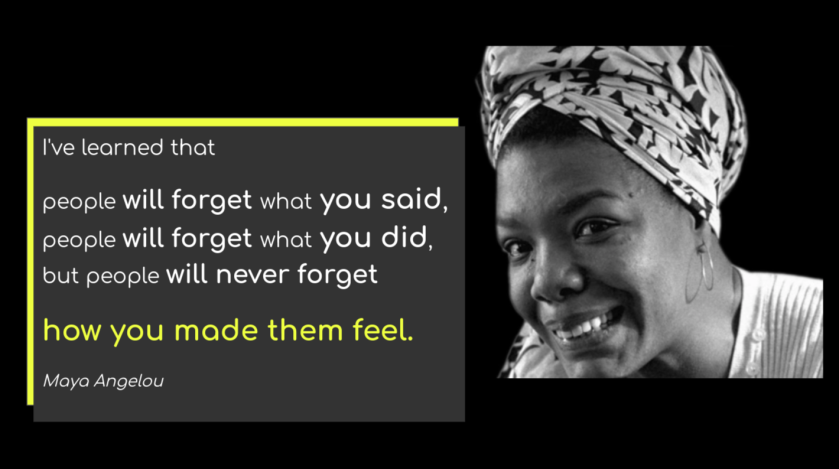
Maya Angelou: “I’ve learned that people will forget what you said …” – Inspirational Quote

Of course, we don’t want to make other people feel miserable or unhappy. So, how do we make them feel good and improve their spirit?

Here are 10 ways to make other people feel special:

  1. Start with smiling – Being positive with others makes them relaxed and opened for collaboration.
  2. Compliment on their appearance – Noticing their shiny healthy hair or being fit and in good shape will do amazing things for their motivation to continue take good care of them selves.
  3. Show appreciation – Frequently express how much you enjoy your interactions and how much your collaborations were beneficial to you.
  4. Support their ambitions – Help them maintain Growth mindset, learn from mistakes and continue dreaming & growing.
  5. Give them undivided attention – Listen wholeheartedly and show empathy and support.
  6. Give them public recognition – Post on social media, or give kudos during team meetings or family gatherings. Showing appreciation in public is a great way to display how much you value the other person.
  7. Share your tips and tricks – Sharing your secret resources make other people feel very special and if they listen to you as a mentor, it is another way to motivate them to reach higher levels of their potential.
  8. Show vulnerability – Share mistakes and silly thing you have made in the past, and how you recovered and learned from them. This will encourage them to share and be vulnerable as well and realize they are not alone in how they are feeling.
  9. Take part in their project – Offer support and help with a big project they are working on before they start feeling overwhelmed.
  10. Offer to do something special – just the two of you: go for a walk, coffee or spend time outside of the daily routine schedule and focus on other things that matter outside of work or study.

When we help to make people feel special, we make better connections, foster kindness, motivate and inspire growth. Who did You Help today?

Posted in communication, Management, Motivation, success, Workplace

Why and How we Should Use Pygmalion Effect to Boost Productivity

The Pygmalion effect, or Rosenthal effect, is a psychological phenomenon where higher expectations lead proportionally to improved higher performance, which makes this method important for improving the overall productivity, including increase considerably the employee’s or student’s efficiency and help an organization grow.

Variety of studies show that people will improve, or drop, to the levels which their teachers of managers believe them to be capable. In order to implement this method in practice, it is up to the managers or teachers to have high expectations for their employees or students, and regularly communicate those expectations.

“Organizational Leaders understandably have an influence on the success of employees, and can play a part in that success or failure, at times, without even realizing it. Positive expectations are important to ensure a positive outcome, as the belief itself can affect the giver and the receiver. Managers not only shape the expectations and the performance of the subordinates but also influence their attitude towards their jobs and themselves, if managers are unskilled it leaves a scar on the employees and the overall unit performance of the company decreases and their reputations as coaches is harmed, on the other hand if the managers can induce confidence and make the subordinates believe in themselves, their capabilities will grow and the growth of the firm happens. “

Here are a few steps to start boosting student’s or employee’s performance:

  • Express confidence in their talent and abilities – to remind them about previous records of success and history of accomplishments.
  • Celebrate Accomplishments – to recognize what’s working well and why, develop a growth mindset and motivate.
  • Assume Good Intent – Listen to what’s being said and try to understand it and don’t “read between the lines” & ask for clarification if needed.
  • Show Empathy – to build emotional connection: listen carefully, put yourself in the other person’s shoes, allow sharing vulnerabilities, build trust and offer help.
  • Think Long Term – focus on what the long term result will be and support consistency.

Posted in Books, Management, TED talks, Workplace

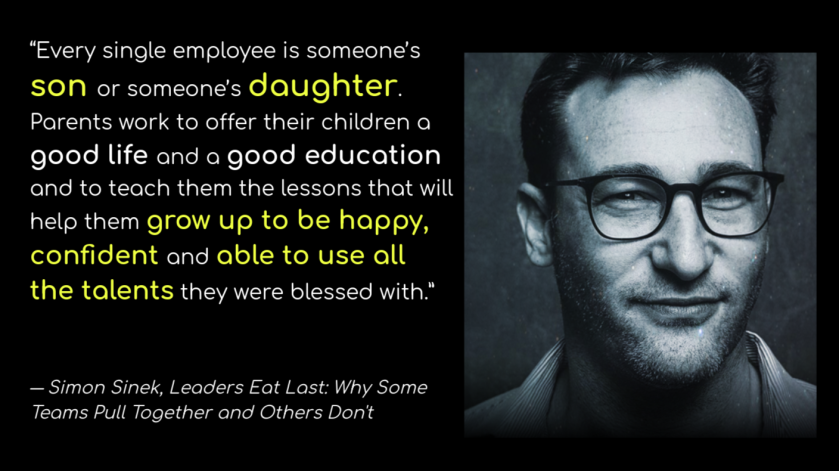
Must-Read Book: “Leaders Eat Last: Why Some Teams Pull Together and Others Don’t” by Simon Sinek

You probably have heard about this book already in the media many times, and much has been already said and written about it since it was published in 2014, so I won’t take your time with long persuasive speech. I enjoyed the book thoroughly, learned a lot about how people grow to be good leaders, and recommend if you haven’t read it yet and want to improve your leadership skills to set time aside and read it.

I promise you, you will feel wiser and better person at the end, and will treat your team with more respect and integrity.

Posted in Inspirational, Quotes, success

Herbert Bayard Swope: “I can give you a formula for failure” – Inspirational Quote of the Week

Happy Wednesday!

Today’s quote comes from Herbert Bayard Swope. He was a US journalist and editor, who was born at the of XIX century and lived until mid XX century. He was the first recipient of Pulitzer Prize for Reporting in 1917 for articles about the German Empire and is a three-times Pulitzer Prize recipient for his lifetime.

Have you ever found yourself trying to please people around you? It happens to me often … I seek to be surrounded with predominantly happy people, but pleasing them might not be always a recipe for successful relationship. Actually, pleasing is not equal to kindness, so see if you could practice the following techniques to reduce your inclination to please people:

  • Don’t pretend you agree with everyone just to be liked.
  • Don’t feel responsible for how other people feel.
  • Stop apologizing.
  • You’re in charge of how you spend your time. Don’t spend it for activities that are not part of your priorities.
  • Learn how to say NO assertively.
  • Don’t feel bad if other people are angry at you. It’s not necessary your fault and you should not compromise your values.
  • Don’t wait for compliments to feel good about yourself.
  • Don’t try to avoid conflicts at all costs.
  • Keep relationships authentic and share honestly when you feel angry, sad, embarrassed, or disappointed, and don’t try to hide your feelings.

Let me know how you feel about pleasing others and what you do to fight the inclination to agree with others, just to keep them happy.