
Posted in Management, Workplace

Transitioning from eCommerce to Product Management

When people imagine the career path into product management, they often picture software engineers or UX designers making the leap. My journey began elsewhere – deep in the world of eCommerce operations and digital site management. Yet every step I took in that environment quietly honed the very skills a great Product Manager needs.

Building Strategy from the Ground Up

As Digital Site Operations Lead at Hudson’s Bay, I wasn’t just keeping the lights on. I influenced the strategy and roadmap for increasing online conversion and profitability year over year. That experience – identifying levers for growth, setting measurable goals, and aligning teams around a plan – is exactly what product managers do when they craft and execute a product vision.

Living Side-by-Side with Product

Over the past five years, I have worked hand-in-hand with product managers on thebay.com, staying close to the products and features as they moved from concept to launch. I’ve helped identify customer pain points, shaped business requirements, and pulled key metrics to demonstrate the importance of new features. I’ve participated in functional, regression, and user testing, and I’ve spent countless hours troubleshooting and enhancing site functionality. This close partnership gave me a front-row seat to the full product development lifecycle and allowed me to practice many of the very responsibilities PMs own.

Leading Across Functions

eCommerce is a team sport. My roles demanded constant collaboration with Product, UX, Technology, QA, Merchandising, Marketing, Buying, and external vendors. Navigating these relationships taught me how to influence without direct authority, manage competing priorities, and keep diverse stakeholders moving toward a shared outcome. Cross-functional leadership is the beating heart of product management, and I’ve been practicing it for years.

Data as a Decision Engine

Product managers live and breathe data. In my operations career, data wasn’t an afterthought – it was the driver of every decision. I tracked site conversion, analyzed customer behavior, and used SQL to uncover insights that shaped priorities. The ability to frame problems with numbers and translate them into actionable next steps has become one of my strongest assets.

Obsessing Over the Customer

Behind every metric is a human being. Whether researching customer feedback on Medallia, retracing customer actions on Fullstory, monitoring repeat purchase rates, or fine-tuning onsite search and recommendations, I’ve always asked: What does this mean for the shopper? Keeping the customer at the center of every decision is second nature now, and it’s exactly the mindset product managers need to build products people love.

Delivering with Operational Excellence

Great ideas mean little if they can’t be delivered. Years of participating in site QA efforts, managing product information systems, and reducing defect rates taught me to balance innovation with execution. Product managers must ensure that what’s planned actually ships with quality – skills I developed while turning ambitious digital strategies into on-site realities.

Leading Teams and Scaling Impact

From hiring and mentoring analysts to developing process documentation and training materials, I’ve invested in people as much as processes. Product management is about scaling impact through others, and leading high-performing teams prepared me to do just that.

Looking Ahead

My path proves that product management isn’t limited to one background. eCommerce operations demanded strategic thinking, customer empathy, data fluency, and relentless delivery – the same qualities that define successful product managers. The titles on my résumé may read “Digital Site Operations” or “Director,” but the work has always been product work at its core.

For anyone considering a similar transition, take heart: the skills you’re honing today may already be the foundation of a product career. Sometimes, you’ve been a product manager all along – you just haven’t changed the job title yet.

Posted in Data Analysis, Management, Marketing, success, Workplace

AI Ethics: The Key to Trust in eCommerce

Artificial Intelligence is revolutionizing eCommerce, from personalized recommendations and dynamic pricing to automated customer service and fraud detection. But as retailers embrace AI to optimize experiences and drive sales, they face a critical responsibility: ensuring AI is deployed ethically.

For eCommerce brands, AI Ethics is no longer optional – it’s a foundational pillar for customers trust, brand reputation, and long-term success.


Why AI Ethics Matters for eCommerce

Today’s consumers expect more than convenience – they demand transparency, fairness, and respect for their privacy. AI-driven tools influence product discovery, pricing, personalized offers, and increasingly, the product content itself – from descriptions to images.

A misstep – whether through misleading AI-generated content, biased recommendations, or misuse of personal data – can erode trust and spark public backlash.

Ethical AI is a competitive advantage that protects your brand and fosters loyalty.


Key AI Ethics Considerations for eCommerce Brands

1. Transparency in Personalization

  • What to Consider: Are product recommendations, search rankings, or pricing algorithms explainable to customers?
  • Why it Matters: Shoppers who feel manipulated by hidden AI may abandon your brand.
  • Action: Offer transparency tools and clear communication around AI-driven experiences.

2. Bias & Fairness in Product Discovery

  • What to Consider: Does your AI system promote products or sellers unfairly due to biased data?
  • Why it Matters: Bias limits consumer choice and can marginalize smaller or diverse sellers.
  • Action: Audit AI outputs regularly and diversify training data to promote fairness.

3. Data Privacy & Consent

  • What to Consider: Are AI-driven personalization and marketing fully compliant with privacy laws (GDPR, CCPA)?
  • Why it Matters: Data misuse erodes trust and invites legal penalties.
  • Action: Prioritize transparent consent processes and empower customers to control their data.

4. Dynamic Pricing Ethics

  • What to Consider: Are your AI-driven pricing models transparent and fair to all customer groups?
  • Why it Matters: Exploitative or opaque pricing damages brand reputation.
  • Action: Set ethical boundaries for pricing AI, ensuring fairness and transparency.

5. AI-Generated Product Descriptions & Images

  • What to Consider: Are AI-generated product descriptions, images, or videos truthful, representative, and free from manipulation?
  • Why it Matters: AI content that exaggerates product capabilities, uses unrealistic images, or creates deepfakes undermines consumer trust and invites legal risks.
  • Action: Implement strict content review processes for AI-generated materials. Clearly label AI-enhanced imagery if applicable and ensure all product representations are accurate and not misleading.

6. AI-Driven Customer Service with Accountability

  • What to Consider: Are AI chatbots and support tools reliable and inclusive?
  • Why it Matters: Poorly designed AI support frustrates customers and damages loyalty.
  • Action: Blend AI with human service options, ensuring accessibility and reliable escalation pathways.

7. Social Impact & Responsible Automation

  • What to Consider: How does AI affect your workforce, supplier diversity, and social equity?
  • Why it Matters: Automation without consideration for its broader impact can harm communities and brand integrity.
  • Action: Use AI to augment – not replace – human contributions and support equitable opportunities across your ecosystem.

Building an Ethical AI Roadmap for eCommerce

Embedding ethics in your AI strategy isn’t just good governance – it’s essential for lasting success. Start with:

Content Oversight: Establish human review checkpoints for AI-generated product content and ensure authenticity.
Bias Audits: Regularly evaluate AI-driven product recommendations, search, and marketing for fairness.
Privacy-First Approach: Offer transparent, consent-driven personalization with robust data protection.
Transparency in AI Use: Clearly communicate when AI shapes product discovery, pricing, or content.
Responsible Innovation: Consider social, workforce, and inclusivity impacts in your AI strategy.


The Bottom Line

In eCommerce, where trust is fragile and competition fierce, ethical AI is a brand differentiator. Companies that integrate AI responsibly – whether through personalized recommendations, dynamic pricing, or AI-generated content – will win customer loyalty and avoid reputational pitfalls.

AI can revolutionize retail – but only if guided by ethics.

Posted in Books, Motivation, Workplace

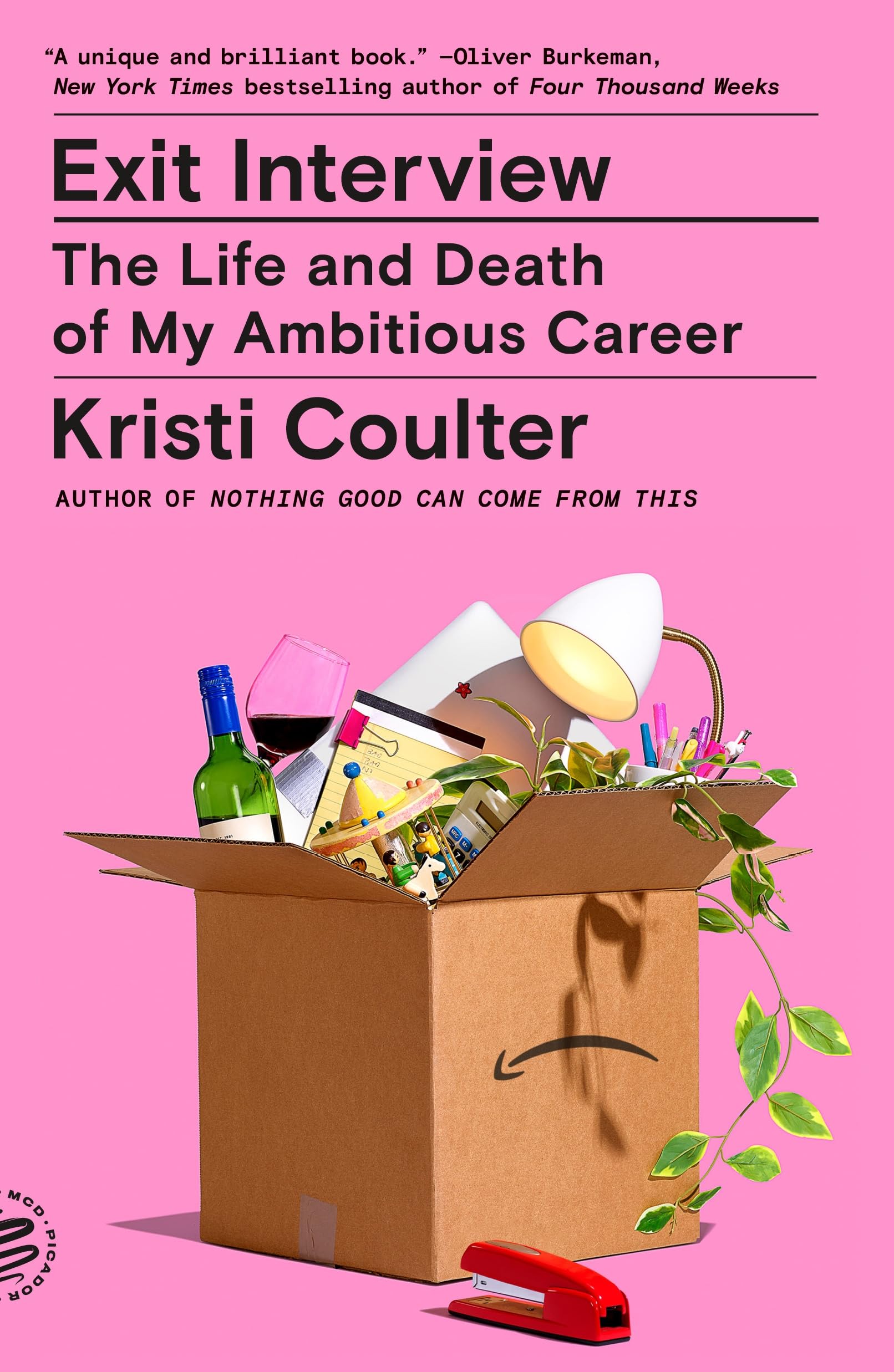
My Exit Interview: What Kristi Coulter Taught Me About Leaving Corporate Retail in 2025

In the days since my role in eCommerce was eliminated – part of a sweeping reorganization as my employer, a legacy retail giant with both a robust brick-and-mortar presence and a now-aging eCommerce platform, filed for creditor protection -I’ve been looking for clarity. For some sense of what all this hustle, all these midnight promotions, all this omnichannel strategizing really meant. I didn’t expect to find comfort in Exit Interview by Kristi Coulter, but I did.

Coulter’s memoir is clearly about her time in Big Tech, but it resonated deeply with me, a career eCommerce professional who spent over a decade trying to modernize a brand that always seemed one step behind consumer expectations. Her sharp, honest prose peeled back the glittery veneer of corporate ambition to show the cost: to our time, our values, our very sense of self.

Reading Exit Interview while sitting in a kitchen I now spend my days in instead of my corner of the open office plan, I found myself nodding. Yes, my team too had built dashboards no one read. We had promoted online programs to executives who still measured success by foot traffic. We had tried to reinvent a digital presence built in 2010, while convincing leadership that “omnichannel” was more than just a buzzword.

Like Coulter, my team chased performance metrics that shifted monthly. We worked holidays and weekends to hit digital sales targets, often sacrificing personal time for the promise of “transformational impact.” And when the end came – not with a handshake, not even with a Zoom meeting or severance pay – it felt less like a career milestone and more like waking up from a long, over-caffeinated dream.

The Illusion of Stability

For years, we were told that adapting brick-and-mortar to digital would secure the future. We did the hard work – migrated platforms, upgraded CMS systems, fought for automation budgets, and launched mobile-first everything. And yet, when the economy squeezed and debt caught up with ambition, the tech-forward teams were among the first to go.

There’s a painful irony in that. We were building the future while quietly being dismissed as cost centers.

The Emotional Hangover

Coulter doesn’t sugarcoat the emotional unraveling that comes with stepping off the corporate hamster wheel. It’s not just about losing a job; it’s about losing the narrative you built around it. For many of us in eCommerce, our careers weren’t just what we did – they were who we were. We were “the future of retail.” Now we’re resumes in inboxes and Slack accounts deactivated without warning.

Reading her words helped me understand that the grief I’m feeling isn’t irrational. It’s not about ego, or even financial fear. It’s about disconnection – from identity, from purpose, from a community of people who spent years doing something we believed mattered.

What Comes Next

If Exit Interview teaches anything, it’s that there is life after the corporate machine. Not necessarily one filled with poetic freedom and farmhouses in Maine, but one where you can begin to reclaim your time, your values, and maybe – eventually – your curiosity.

Right now, I’m learning to sit with the uncertainty. To take stock of what I built, even if the company itself no longer stands. To reconnect with the part of me that got into this work not for titles or KPIs, but because I genuinely believed in helping people discover and buy things they love.

I don’t know what comes next. Consulting? A startup? A total pivot? But I do know this: leaving wasn’t my choice, but how I move forward is. And for that clarity, I owe at least a footnote of thanks to Kristi Coulter.

Her exit interview has become the beginning of mine.

Posted in Books, Motivation, Quotes, success

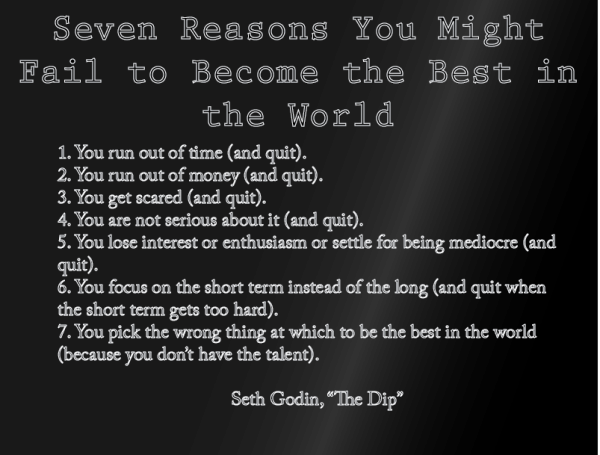
Seven Reasons You Might Fail to Become the Best in the World, defined by Seth Godin in “The Dip”

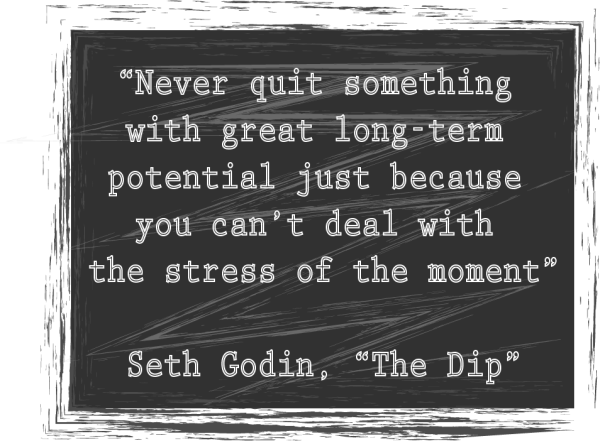
In his bestselling little book “The Dip”, the famous business marketer and author Seth Godin proves that winners are really the best quitters. Godin helps us understand that winners quit fast and often, and without feeling guilty – until they commit to beating the right Dip.

Every new project, job, or hobby starts out exciting and fun until … it gets really hard, and not much fun at all. You might be in a Dip – a temporary setback that will get better if you keep pushing. But maybe it’s a total dead-end. What really sets the superstars apart is the ability to know if it’s a dead-end or temporary setback.

Winners seek out the Dip. They realize that the bigger the challenge, the bigger the reward for getting past it. If you can beat the Dip to be the best, you’ll earn profits, glory, and long-term security.

Do you quit often? Can you handle “the dip”?

Seven Reasons


If you haven’t yet, consider reading it:

The Dip: A Little Book That Teaches You When to Quit (and When to Stick)

Posted in Books, life, Personality, success

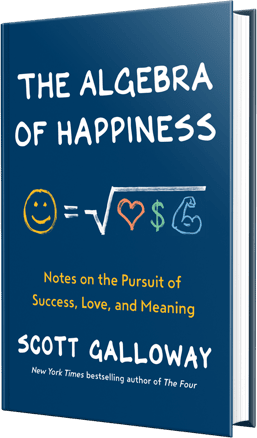
Book: The Algebra of Happiness by Scott Galloway

1dd2fcabea048dc32a2160a5259533b8

This book should be on everybody’s nightstand! It contains so much wisdom and truth, extracted from the author’s experience and knowledge, accumulated through the years and written with a fantastic sense of humor. 

Reading this book made me feel a lot better about myself and my life journey, accomplishments, and my perception of being happy. 

Scott Galloway is the New York Times bestselling author of The Four: The Hidden DNA of Amazon, Apple, Facebook, and Google and a professor at New York University’s Stern School of Business.

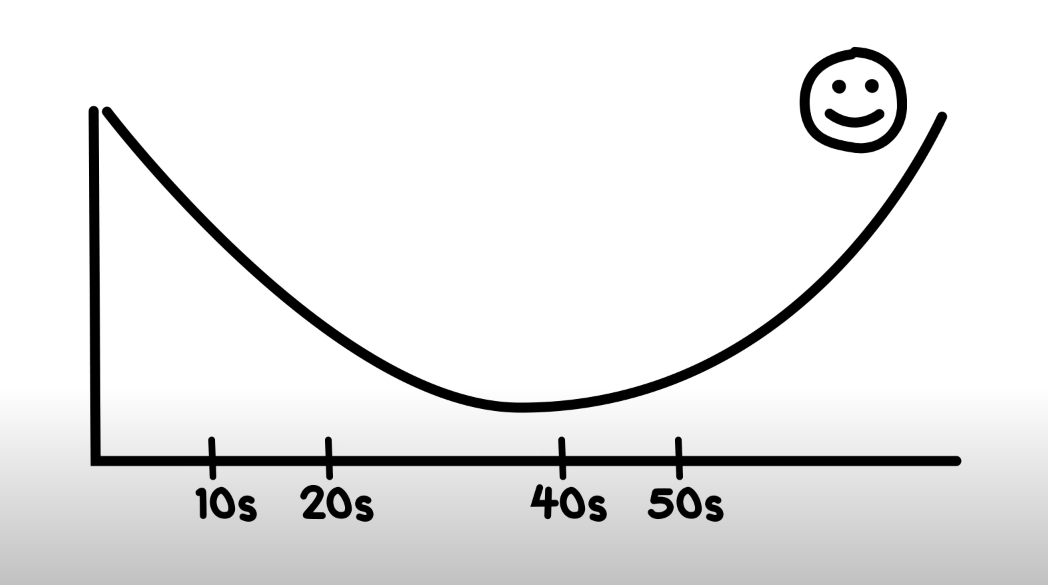
HappinessCurve
The curve of Happiness thought the life journey

Just some of Scott Gallaway’s pieces of advice for Living a Happy Life:

  • If you find you are stressed, recognize this is a normal part of the journey and just keep on keeping on.
  • Lack of balance in the twenties and thirties, sweat and work translate into balance later. Get busy while you are young.
  • The definition of “rich” is income greater than your burn rate.
  • In 50s married couples have 3x the assets of their single peers. Why? Sharing expenses, streamlining decisions, buying assets that increase in value instead of things that rust, rot, or depreciate.
  • Career advice: A less sexy job equals more professional fulfillment. A sexy job equals less fulfillment. A boring company equals a good investment. An exciting company equals a bad investment.
  • Serendipity is a function of courage. Nothing wonderful will happen without taking a risk and subjecting yourself to rejection.
  • Drink less, think long term (compound interest), and spend money on social and experiences.
  • Give somebody a good death. Provide comfort to a loved one that is terminally ill.
  • Get the easy stuff right: show up early, have good manners and follow up.
  • Things vs Experiences – Studies show people overestimate the happiness that things will bring them, and underestimate the long-term positive effect of experiences. Invest in experiences over things.

Posted in communication, success, TED talks, Workplace

TED Talk: Julian Treasure of How to Speak to be Heard


What did I learn from Julian Treasure’s talk?

Seven deadly SINS of speaking. Let’s all try to avoid them!

  1. Gossip
  2. Judging
  3. Negativity
  4. Complaining
  5. Excuses
  6. Exaggeration/ lying
  7. Dogmatism

♠ ♠ ♠

Four elements which will improve the speech to be more powerful and important for the audience:

  1. Honesty = being true to what you say, being straight and clear
  2. Authenticity = just being yourself
  3. Integritybeing your word,actually doing what you say, and being somebody people can trust
  4. Love = wishing people well

♠ ♠ ♠

Six tools which will increase the power of speaking if used in the right way:

  1. Register – speak with deep lower voice if you want to project power and with authority;
  2. Timbre the way the voice feels (people prefer voices which are rich, smooth and warm);
  3. Prosody – the patterns of stress and intonation in speaking;
  4. Pace – how quickly we speak;
  5. Pitch – high or low
  6. Volume


Posted in success, TED talks, Workplace

TED Talk: Richard St. John About the Secrets of Success

Presenting two brief, but insightful and inspirational talks by the success analyst Richard St. John

Here are the 8 secrets of SUCCESS:

  1. Have PASSION and LOVE what you do.
  2. WORK hard and have FUN while you work.
  3. Be GOOD in what you do and PRACTICE, practice, practice.
  4. FOCUS on ONE thing.
  5. PUSH yourself mentally and physically.
  6. SERVE others something of VALUE.
  7. Have IDEAS.
  8. PERSIST through failure, criticism, rejection, assholes and pressure.


Thank you, Richard St. John, for being successful and reveal the 8-traits to be great!

… and here is my next good read …

8 to Be Great: The 8-Traits That Lead to Great Success

Posted in TED talks, Workplace

TED Talk: Scott Dinsmore about How to Find a Work You’ll Enjoy

“… Of the people I’d sit down with for lunch, 80 percent would quit their job within two months.” 

“Why are you doing the work that you’re doing?” And so often their answer would be, “Well, because somebody told me I’m supposed to.” And I realized that so many people around us are climbing their way up this ladder that someone tells them to climb, and it ends up being leaned up against the wrong wall, or no wall at all.” says Scott Dinsmore.